Ken Russell, of Tommy fame. Ken Russell, director of Altered States. Billion Dollar Brain (with Michael Caine as Harry Palmer), and Bram Stoker's Lair of the White Worm. The Ken Russell.
In his early days, Russell made short films and documentaries for British television. He made several experimental films with the BBC's Omnibus series — films which many consider to be of questionable taste, but which foreshadow some of the truly great movies mentioned above.
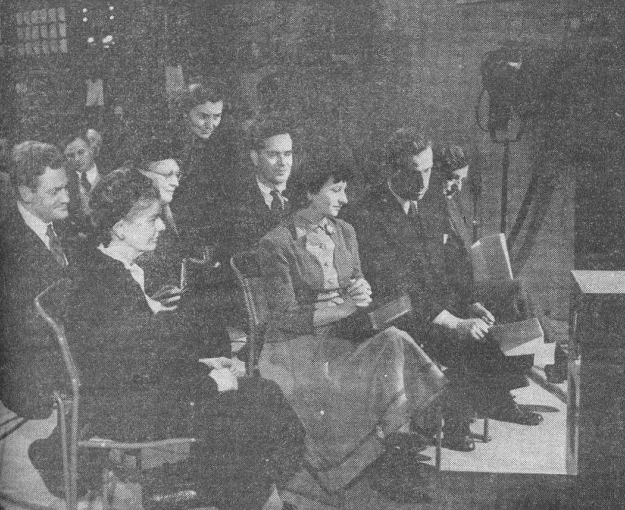
This is where Reed comes into the picture. The award-winning playwright took at least one course with the BBC on writing for television (Reed is in the front row, second from the right) in 1952. By the late 1960s and early 1970s, the days of radio drama and comedy were drawing to a close. The Third Programme, for which Reed wrote so many memorable plays, became Radio 3 in 1970.
For some reason, Omnibus decided to pair the Sitwellian Reed with king-of-kitsch Russell for a television project on the composer Richard Strauss: Dance of the Seven Veils (1970). The director's final vision, however, couldn't have sat well with Reed:
“The film depicts Strauss in a variety of grotesquely caricatured situations: attacked by nuns after adopting Nietzsche's philosophy, he fights duels with jealous husbands, literally batters his critics into submission with his music and glorifies the women in his life and fantasies.” —screenonline.org.ukApparently, the television audience was upset by the appearance of Hitler (among other things), and the complete film was only broadcast once. Later, when Richard Strauss' family withdrew permission for Russell to use the composer's music, Johann Strauss waltzes were substituted! (Which begs another question: which Johann Strauss?)
Reed, however, still receives script and scenario credits on the film (for that matter, so does Richard Strauss). The draft of Reed's untitled teleplay remains in a notebook, collected among his personal papers. It would be his only venture into the realm of television.