|
|
Documenting the quest to track down everything written by
(and written about) the poet, translator, critic, and radio
dramatist, Henry Reed.
An obsessive, armchair attempt to assemble a comprehensive
bibliography, not just for the work of a poet, but for his
entire life.
Read " Naming of Parts."
|
Contact:
|
|
|
|
Reeding:
|
 |
I Capture the Castle: A girl and her family struggle to make ends meet in an old English castle.
|
 |
Dusty Answer: Young, privileged, earnest Judith falls in love with the family next door.
|
 |
The Heat of the Day: In wartime London, a woman finds herself caught between two men.
|
|
|
|
Elsewhere:
|
|
All posts for "TLS"
|
|
|
27.7.2024
|
Adrian Stokes was an eminent British art critic, and a painter and poet in his own right. Born in 1902, educated at Oxford, Stokes met Ezra Pound during a trip to Italy, and it was Pound who persuaded T.S. Eliot at Faber & Faber to publish Stokes' first collections of essays: The Quattro Cento: A Different Conception of the Italian Renaissance (1932), and The Stones of Rimini (1934). Later works include Smooth and Rough (1951), and Michelangelo: A Study in the Nature of Art (1956).
In his 2002 introduction to Stokes' Michelangelo, the late Richard Wollheim begins:
In his lifetime Adrian Stokes achieved the kind of fame that has nothing to do with success. No book of his sold more than five hundred copies, but his prose, fiercely difficult by the standards of the time, seized the imagination of some of the most interesting and creative minds of his age. They included sculptors, painters, poets, architects, critics of the arts: Henry Moore, Barbara Hepworth, Ben Nicholson, Henry Reed, Colin St John Wilson, William Coldstream, Elizabeth Bishop, Lawrence Gowing, Andrew Forge; the list could go on.
That's one heck of a fan club. I was curious about how Wollheim compiled this list, and a quick search turns up an official Adrian Stokes website (caution! pop-up ads).
There we find Dr. Stephen Kite, a Stokes scholar, quoting a letter written to the Times Literary Supplement in 1965, "signed by eighteen prominent thinkers and artists — including Coldstream, Moore, Hepworth and Wollheim — claimed Adrian Stokes as amongst 'the most original and creative.... writers on art.'" A-ha! That's three of the critics on Wollheim's list, as well as Wollheim himself. Thankfully, Kite provides footnotes for his references.
Going to the TLS for August 12, 1965, we find the letter Kite refers to: a response to a list of important books of the first half of the decade, in the July 29 issue. Here is the letter, reproduced in its entirety:
Sir,—The list of "English Books of the 1960s" in your special number, "Sounding the Sixties", includes, under various headings, more than twenty volumes concerned with aspects of art. During the 1960s Mr. Adrian Stokes has published his Three Essays on the Paintings of our Time, Painting and the Inner World, and The Invitation in Art. None of them gets a mention in your list. Although, as you say, 'the list does not pretend to completeness', it seems to us unfortunate that it should exclude a writer who has claims to being the most original and creative living English writer on art.
ALAN BOWNESS, WILLIAM COLDSTREAM, ANDREW FORGE, JOHN GOLDING, LAWRENCE GOWING, STUART HAMPSHIRE, BARBARA HEPWORTH, FRANK KERMODE, R. B. KITAJ, ROBERT MELVILLE, HENRY MOORE, JOHN PIPER, HERBERT READ, HENRY REED, NORMAN REID, JOHN RUSSELL, DAVID SYLVESTER, RICHARD WOLLHEIM. (p. 697)
With the addition of Bishop, Nicholson, and Wilson, that fills out Wollheim's list. I wonder why he mentions Reed in his introduction, and not the better-known Herbert Read? There are other connections, too: both Stokes and Reed were influenced by the psychoanalytic theories of Melanie Klein (Stokes was a patient of Klein's), and at least three of the artists and writers who signed the letter to the editor knew Reed personally: art critic Robert Melville, from Birmingham (brother of the painter John Melville, see below); Frank Kermode, whom Reed knew in London and Seattle; and, of course, Elizabeth Bishop.
Adrian Stokes died in 1972. A selection of his poetry can be found on the Adrian Stokes website, and many of his paintings can be viewed online through the Tate Gallery.
|
1537. Radio Times, "Full Frontal Pioneer," Radio Times People, 20 April 1972, 5.
A brief article before a new production of Reed's translation of Montherlant, mentioning a possible second collection of poems.
|
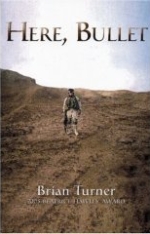
This recent feature in The Guardian, " In the Line of Fire," again asks the question, "Where are the war poets of this war?" (see " To the Poets of 1940," previously). In answer, the article suggests there is 'one book of high-quality poetry about the Iraq war': Here, Bullet, by Brian Turner.
Henry Reed also receives passing mention, along with fellow Second World War poets Alun Lewis and John Pudney. As part of the legacy of critics asking "Where are the war poets?", the article mentions an editorial from the August 8th, 1942 Times Literary Supplement: " Poets in War" (2MB .pdf). Of course, I looked it up:
POETS IN WAR Where are the poets of the war? This question is often asked by those who remember that the last war threw up a fair amount of notable poetry. And that is true; for there were then living several highly skilled and experienced poets—Bridges, Kipling, Hardy, and there can be added Doughty, all of whom had something eloquent to say about the war or about aspects of it. But they, and others, were established writers; they viewed the war through the accumulated knowledge and wisdom of years; they were not soldiers, neither were they liable to be called up. Nor, when one thinks of it, have there ever been many poets of war who have been at the time of writing on active service, though the last war produced several poems by fighting men, like Julian Grenfell and Rupert Brooke, which are not likely to be forgotten. The fighting man, however, who writed about war is exceptional, and none too common is the soldier who sings of war years afterwards. Full of war as European poetry is, the singers of war have been for the most part not soldiers. Aeschylus, it is true, is said to have taken part in Salamis, and his narrative of that battle reads like participant's. Nearly all the epics are of war: and Homer's audience clearly delighted in it, but to the humane Virgil it was essentially a matter for sorrow and pity. Tyraeus, the Greek elegist, was certainly a warrior: and he appears to have seen war at too close quarters to glorify it.
Thoughts such as these are almost inevitable when “Poems of this War,” reviewed on another page, invites attention. The contrast is great. For this anthology is not the work of old hands, exempt from the liability to serve, but of “the younger writers,” all presumably of military age, where, as some of them certainly are, actually serving, or not. The anthology then shows how the war affects the youngest generation of those who make poetry the vehicle of their thoughts. Or, to be cautious, how it affects particular representatives of that generation picked by particular editors. That they write with complete sincerity is not to be doubted; they say what they wish to say in their own language; and yet, as Mr. Blunden in his introduction implies, there is much that is traditional in war poets which is not to be found in them. There is “no militarism, or personal claim, or study of revenge.” This is a remarkable comment to make. Militarism is no doubt offensive even in professional soldiers, many of the best of whom have been free from it. Personal claims, again, may be sheer egoism. Revenge may be an injurious study. But is there no such thing as righteous indignation? May not a dear homeland be in imminent danger? That war is a foul way of living, that all things pleasant and legitimate are shattered by it, that soldiering, even in the best cause, may be at times and to some temperaments an unmitigated bore—all this is true; and there is a middle generation living which has been through it all. No doubt, however, war was to that generation more of a novelty than it is to the latest, which was born in its atmosphere and bred up in its aftermath.
These poems, Mr. Blunden tells us, have been written on the principle of the “innocent eye.” The mood of this volume is “seeing where the truth is.” So far, so good; but may not the eye in the innocence of youth miss things which older commentators, equally innocent, will have acquired the habit or the power of discerning? Can anything like the whole truth about so vast a subject, so ubiquitous a presence, as universal war, be revealed to any eye? The facts here are admittedly in various moods. Some of them are in the trenches or entering battle; others share the common danger of being bombed; others meditate on natural beauty, on love, on friendship, on death and life. They are quite candid. They are oppressed by the calamity which has befallen the world. In vain to remark that they are not old enough to look back on much in tranquility. Yet they must be taken for what they say and for what they do not say, as a symptom, because they express themselves without labour. To read them is to infer that, were there no war, they would still be poets, but poets compelled, like all too many children of this age, to think, observe, and write within a narrow living-space. Also reviewed in this issue are Poems of This War: By Younger Poets (New York: Cambridge University Press, 1942), edited by Patricia Ledward and Colin Strang ("Songs of Emergency," p. 392), and volumes by Sidney Keyes, Alan Rook, Keidrich Rhys, and John Heath-Stubbs.
By coincidence, August 8th, 1942—the day this editorial appeared in the TLS—was the very day Reed's " Naming of Parts" was printed in The New Statesman and Nation.
|
1536. L.E. Sissman, "Late Empire." Halcyon 1, no. 2 (Spring 1948), 54.
Sissman reviews William Jay Smith, Karl Shapiro, Richard Eberhart, Thomas Merton, Henry Reed, and Stephen Spender.
|
I was intrigued by mention, in the Wikipedia entry for " War poet," of an editorial which appeared in England before the outbreak of major hostilities during World War II. I looked it up this evening, and found the words still ring soundly true: a rallying cry for poets to champion human experience during troubling times. I reproduce it here, in full, knowing that Reed must have read these very words. From the Times Literary Supplement, 30 December 1939, 755:
TO THE POETS OF 1940 We review in this issue some collected poetry of 1939. What can the poets do with the year 1940, when the world seems to be threatened with a new Dark Age? Of one thing we can be certain: if, shocked by the suffering inflicted by nations in tumult, they fall into resignation or despair, and yearn only for the nothingness where lost man may find "what changeless vague of peace he can," then the Dark Age is assured. And that is true too if they try to make harmonies from hatreds or seek the salvation of man in political formulas labelled Left or Right.
This war has followed so close on the heels of the other that it conveys no sense of novelty to awaken the creative spirit. It has the forbidding aspect of an old foe. Consciousness has been struggling vainly to free itself from the mark of the last calamity, but our poetry continued to be permeated, in varying forms and degrees, with the memory and often with the mood of 1914-18. A quarter of a century of moral disquietude and revolt has not been accompanied by any clear conception of what new order should replace the old. Deliberately heedless, even defiant of ancient values, poetry receded and, but for some faithful hands, might have lost itself. It can no longer be argued that these were symptoms of an age of transition; there never was any other kind of age. Here we are faced with an undeniable repetition of history, with nothing original, nothing unique about it. What can the poets make of it in their explorations of reality? Is it possible to find in this convulsion not the cloud of a Dark Age but the dawn of another Renaissance?
The prospects are precarious, but not hopeless. The first shock of the war produced a paralysis of the poetical intelligence. Verses turned into tears. But already those who are concerned to keep poetry alive are adding their comment on where the world stands. England was long agonized by the ambitions of a conqueror at the beginning of the last century, which was prematurely outraged like our own. Yet it saw the quickening of a new spirit in English poetry comparable with the splendor of Elizabethan days. It is significant that the seventeenth century, plagued by civil war and religious and intellectual conflicts, also saw an abundant and distinguished poetic achievement in intimate response to the pace of life in days of stress and change. he last Was presented the spectacle of hundreds of young poets, in tune with the national will, first finding voice in the brutal fact that evil things were menacing their heritage. The resultant poetry was in the irony and pity of it, such as Wilfrid Owen's, or in the noble exultation of those who endured hardship and danger for an idea, such as Alan Seegar's [sic]. The same idea is at stake—because the War was not finished. Civilization was granted an uneasy reprieve while the Philistine took breath. He is now reinvigorated and more desperate, and we are feeling the pulse of the same crisis.
Clearly wars and revolutions are destroying the old social order of the world. But we need not despair of the birth of a new and finer order. It is for the poets to sound the trumpet call. We see the warning in Germany and Russia of the way the arts decline when the paths of humanity are polluted by the predominance in every department of life of a cheap political idea. In those unhappy lands the creative faculty is extinguished. Here it is still watchful and alert, and it knows that this is its battle, its test. It will draw its spiritual ecstasy from this renewed assault on human dignity. Patriotism alone is not enough; but the promise of a renovated world, saved at last from the jackboots of violence, should be sufficient inspiration. The beauty of the new poetry will be in its integrity; it will be grave, positive and stark, because it is forced to look intently at the worst, but it will relate to the immediate, agonizing facts in universal terms. It may even find a programme for this immediacy. Poetry and religion have an eternal alliance, though for too long it has been unacknowledged. Religion is an organizing force with an intensity of purpose more clarifying and constructive than human reason, which in these sad days is suspect. Poetry, "the breath and finer spirit of all knowledge," hand in hand with religion can exercise a magnetism to keep hope alive and in movement. The monstrous threat to belief and freedom which we are fighting should urge new psalmists to fresh songs of deliverance.
Update: More on the Times Literary Supplement's role in wartime England is available at the TLS Centenary Archive. ( Thanks, Bruce!)
|
1535. Reed, Henry. "Talks to India," Men and Books. Time & Tide 25, no. 3 (15 January 1944): 54-55.
Reed's review of Talking to India, edited by George Orwell (London: Allen & Unwin, 1943).
|
|
|
|
1st lesson:
Reed, Henry
(1914-1986). Born: Birmingham, England, 22 February 1914; died: London, 8
December 1986.
Education: MA, University of Birmingham, 1936. Served: RAOC, 1941-42; Foreign Office, Bletchley Park, 1942-1945.
Freelance writer: BBC Features Department, 1945-1980.
Author of:
A Map of Verona: Poems (1946)
The Novel Since 1939 (1946)
Moby Dick: A Play for Radio from Herman Melville's Novel (1947)
Lessons of the War (1970)
Hilda Tablet and Others: Four Pieces for Radio (1971)
The Streets of Pompeii and Other Plays for Radio (1971)
Collected Poems (1991, 2007)
The Auction Sale (2006)
|
Search:
|
|
|
Recent tags:
|
Posts of note:
|
Archives:
|
Marginalia:
|
|