Here's an useful resource for researchers of all walks: UNZ.org, which is billed as "A Free Website for Periodicals, Books, and Videos" provided for "purposes such as criticism, comment, news reporting, teaching, scholarship, and research."
The site is well-organized and easy to use (if not looking a little bit like the Internet circa 1996). A quick survey of the 1930s and 40s delivers works by W.H. Auden, C. Day Lewis, Louis MacNeice, and Stephen Spender.
And what of Henry Reed? Turns out there's lots! Including Reed's answer to "The Cost of Letters" questionnaire in the September, 1946 issue of Horizon; G.D. Klingopulos' review of A Map of Verona in the December, 1946 Scrutiny; the first appearance in print of Reed's poem, "The Auction Sale," from the October Encounter of 1958; and Geoffrey Strickland's review of Reed's collected Lessons of the War in the May, 1971 issue of Encounter. Plus, dozens of other mentions of Reed in other journals and periodicals to be sieved through.
Give your favorite author- or poet-of-interest a search, yourself.
|
UNZ.org
Letter to Robin Skeltonfonds (fôndz; Fr. fôn) n. the entire body of records of an organization, family, or individual that have been created and accumulated as the result of an organic process reflecting the functions of the creator.I work in a library, albeit in a low-level administrative capacity, and I pride myself on knowing the lingo. But I've never come across this term before. Probably because it's been adopted from the French, meaning "foundation" or "groundwork"; a lace-making term. In the archival sense, a fonds is a meta-collection made up of smaller collections of papers and works, all based upon—or originating from—a single source or author. In the Robin Skelton Fonds, University of Victoria McPherson Library Special Collections, we find this entry for a letter from Henry Reed: Reed, Henry. 1 in, 1963, als. Includes ts. of poem, "Movement of Bodies" by Reed.With the abbreviations unabbreviated, that translates into: "From Henry Reed: one incoming letter dated 1963, handwritten and signed, which includes a typewritten copy of his poem, 'Movement of Bodies'." Robin Skelton (1925-1997) was a poet and critic, and a professor of English literature at the University of Victoria, British Columbia. We know him primarily for editing two anthologies which include Reed's poems: The Poetry of the Thirties (Penguin, 1964), and The Poetry of the Forties (1968). It's easy to imagine that Reed's letter pertains to his inclusion in either anthology, but the typescript of "Movement of Bodies" is problematic: it doesn't appear in either book. The Poetry of the Thirties has an early poem of Reed's, "Hiding Beneath the Furze," and the Forties anthology contains "Naming of Parts," "Judging Distances," "Unarmed Combat," and a lesser-known poem, "The Wall." Perhaps there's something interesting here, or perhaps Skelton just declined to include a fourth Lessons of the War poem.
Letter to Denys Kilham RobertsContinuing to peck through library archives and special collections, I've found a letter (or letters) from Henry Reed, written to Denys Kilham Roberts, in the Historical and Literary Manuscript Collections at the University of Iowa. From the index to their finding aids:
ROBERTS, DENYS KILHAM. Papers of Denys Kilham Roberts. 1.5 ft. Correspondence to and from a British writer of the 1920s and 1930s. MsC828.Iowa's index doesn't go into greater detail, but the library catalog does: "Roberts, Denys Kilham, 1903-1976. Correspondence, 1930-1964," with letters from (and/or to?): E.M. Forster, David Gascoyne, Wilfrid Gibson, Robert Graves, Herbert Read, Edward Sackville-West, Siegfried Sassoon, George Bernard Shaw, Julian Symons, and Evelyn Waugh, among many others (Reed included). A summary describes the collection: Discussing his publications and those of his correspondents; concerning a BBC program titled "Catchword Songs"; soliciting literary contributions to various publications; encouraging other writers. Roberts compiled and edited numerous poetry anthologies during the 1930s, '40s, and '50s, including the five-volume The Centuries' Poetry (1938-1942). He also served as Secretary of the Society of Authors during the 1940s, and edited Penguin Parade, a showcase of "New stories, poems, etc. by contemporary writers," between 1937 and 1945. At first I was hopeful that Roberts may have solicited a poem from Reed for Penguin Parade, but looking at all the available covers in AbeBooks turns up nothing. A quick look at the bibliography, however, reveals Roberts listed as one of the editors of the journal Orion: A Miscellany, to which Reed contributed twice: his poem "King Mark" (1945), and the essay "Joyce's Progress" (Autumn, 1947). It would seem logical that Reed's correspondence would be in regards to one of, or both of, his Orion appearances. Alas, Iowa provides no dates.
Hidden Treasures of the HRCI came across a curious reference this evening, to a "Collection, 1924-1983," with a laundry list of associated names: J.R. Ackerley, Brigid Brophy, Edward Carpenter, Rena Clayphan, G. Lowes Dickinson, George Duthuit, Roy Broadbent Fuller, Sir John Gielgud, Henry Festing Jones, James Kirkup, Francis Henry King, Rosamond Lehmann, Desmond MacCarthy, James MacGibbon, Sean O'Faolain, Sir Herbert Edward Read, Henry Reed, and Vita Sackville-West. But no location, no source, and only a partial title. Obviously the record was uploaded from a library catalog, somewhere. But where?
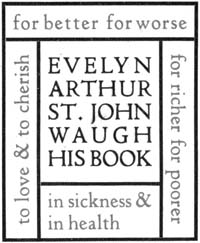
I had a feeling the people on the list had something (or someone) in common, but I couldn't puzzle it out. I searched the Location Register. I searched for library and .edu holdings. And then I suddenly remembered my WarGames, where Lightman (Matthew Broderick) is counseled to "go straight through Falken's Maze," the first game on his list. Ackerley. Joe Ackerley is the first name in the list. Protovision, I have you now. I don't know why I didn't think of it straight off: an easy search of WorldCat turns the collection up, at the Harry Ransom Center, University of Texas at Austin:  Following the holdings library on WorldCat whisks you into the University of Texas Libraries' catalog record for "Ackerley, J.R., Collection 1924-1983". And there, among the cardboard boxes filled with manila folders and acid-free envelopes, are four letters from Henry Reed to Ackerley, dated from 1937 to 1942. During those years, Ackerley was editing the BBC's magazine, The Listener, where Reed published his first poems. But wait, there's more! Led by the tantalizingly linked author field "Reed, Henry, 1914-1986" in the collection's catalog record, we discover that the Ransom Center's book collection has quite a few editions of Reed's, including signed copies of A Map of Verona originally presented to Ackerley and Edith Sitwell, as well as Evelyn Waugh's personal copy (with bookplate). I can't begin to tell you how marvelous it is that the Texas Libraries thoughtfully provides a "Bookmark Link" feature: static URLs for all their records. The Ransom Center's Ackerley collection isn't detailed in their online finding aids, but at the end of the maze I also turned up a copy of a letter to Reed in the correspondence files for Alfred A. Knopf.
All Good Things Go to TexasIn this week's New Yorker, "Final Destination" (printable article), an in-depth look at the collections and archives at the Harry Ransom Humanities Research Center of the University of Texas at Austin, and the unstoppable tide of authors' papers and manuscripts which end up there:
There is not much that other institutions can do when Texas is interested. After Osborne, Stoppard, Penelope Lively, and others sold their papers to Texas, the mass departure aroused alarm in Britain—a 2005 headline in the London Times proclaimed, 'writers unite to fight flight of literary papers to u.s.' To counter the Ransom Center, Britain’s national-heritage fund changed a rule prohibiting public money from being spent on material less than twenty years old; the exclusion was reduced to ten years. The change barely diminished the flow of work across the ocean, however. Staley [the Center's current director] does not have much sympathy for the aggrieved. Last year, at a conference at the British Library, Staley was asked about an essay in which the British poet laureate Andrew Motion argued that national treasures belonged in the nations that created them. He retorted, 'Like the Elgin Marbles?' I know of at least four Reed-related items in the Ransom Center's archives: A 1944 letter from novelist Sid Chaplin to John Lehmann, calling Reed's "The End of an Impulse" in New Writing and Daylight 'the most sensible piece about modern poetry I have seen in a long time'; a 1945 typescript of one of Reed's BBC talks in the Elizabeth Bowen collection; a letter from Reed to Dame Edith Sitwell; and Sitwell's reply to Reed.
Collected, At LastHere's an interesting bit of trivia: a Collected Poems of Henry Reed was proposed as early as 1979, seven years before his death.
The Archive of Carcanet Press is housed in the John Rylands University Library at the University of Manchester. The collection contains communications to and from Carcanet's editors, authors, and critics. In correspondence from between April 1979 and May 1980, editor Michael Schmidt, co-founder of the Press, and David Jesson-Dibley, go back-and-forth about current, possible, and future projects: Much of this relates to Robert Herrick's Selected poems, edited by Jesson-Dibley as part of the Fyfield series and published in 1980. Includes references to: Schmidt's initial suggestion that Jesson-Dibley undertake the project, and suggestions put forward by both men of potential poets for Jesson-Dibley to edit; the possibility of editing a Fyfield volume of Edward, Lord Herbert of Cherbury's verse; Jesson-Dibley's suggestion of a volume of lives and anecdotes of seventeenth-century poets; the ultimate selection of Herrick, and plans for the book's content and arrangement; his progress; and the contract. Other topics include: Jesson-Dibley's attempts to find a publisher for a novel he has written and Schmidt's advice on this; the possibility of Carcanet undertaking a Collected Poems of Henry Reed; a play Jesson-Dibley has completed called Ahab and his neighbours; his other work, including some teaching; and Schmidt's book An introduction to fifty modern poets (1979). I tracked down the library's copy of Fifty Modern British Poets, hoping that Schmidt may have granted Reed a special place among the lives of his peers. But all I found was a small, disappointing note in the editor's Preface: 'Had I been able to include sixty poets, I should have added essays on Robert Bridges, Arthur Symons, John Masefield, Siegfried Sassoon, Norman Cameron, Henry Reed, Seamus Heaney, Alun Lewis, Peter Scupham, and Roy Fisher.' In his book Reading Modern Poetry, Schmidt asks: 'Will Henry Reed ever be more than an anthology piece and a brilliant parody?' We'll see. Carcanet inherited Oxford University Press's Oxford Poets list in 1999, following OUP's decision to drop contemporary poetry. There is a glimmer that Carcanet intends to reissue Reed's Collected Poems as a paperback in 2007, bringing the book full-circle.
|
||||||||||||||||||||||||||||||||||||||
|
|
|||||||||||||||||||||||||||||||||||||||